
Hotel Reputation Management: Complete Guide for 2025
Master hotel reputation management with our complete guide. Includes TripAdvisor/Booking.com/Expedia strategies, review response templates, revenue impact data, platform comparisons, and 90-day action plan.
Introduction: The Hotel Reputation Revenue Equation
Hotel reputation isn't just about guest satisfaction—it's a direct revenue multiplier. Research from Cornell University's School of Hotel Administration reveals that a single point increase in your hotel's review score generates a 9-11% increase in RevPAR (Revenue Per Available Room). For a 150-room hotel earning $15,000 daily, that's $1,350-$1,650 in additional revenue per day from one rating point.
Yet managing hotel reputation remains deceptively complex. Your property exists on 15-20 different review platforms simultaneously—TripAdvisor, Booking.com, Google, Expedia, Hotels.com, Yelp, and dozens more. Each platform has unique algorithms, response mechanisms, and visibility rules. A strategy that works on TripAdvisor fails on Booking.com. A response that resonates on Google gets flagged as generic on Expedia.
This guide provides everything hospitality managers need to master reputation management across all major OTA platforms in 2025. You'll learn exact platform algorithms, revenue-impacting metrics, response templates that actually work, technology platforms worth the investment, and crisis protocols that protect your reputation when problems occur.
The stakes are high. A hotel ranked #5 in its category can command a 20-30% price premium compared to a #50 property. That reputation difference directly translates to occupancy rates, direct bookings, and guest quality. This is why hotels pay $20.00 per click for "hotel online reputation"—they understand the equation.
Let's transform your reputation strategy into a predictable revenue engine.
Understanding the Guest Review Bias Problem
Before diving into strategy, you need to understand a critical truth about hotel reviews: they're systematically biased toward the negative.
The 70-to-10 Problem:
- Extremely satisfied guests: Only 10% leave reviews
- Extremely dissatisfied guests: 70% leave reviews
- Moderately satisfied guests: 2% leave reviews
This means your review profile is skewed. A guest has a perfect 4-night stay? They might mention it to two friends. A guest experiences a noisy room on night two? They'll post an angry one-star review on TripAdvisor, Google, and Facebook within hours.
This bias is why hotels with genuinely good service can appear to have mediocre ratings (3.8-4.1) while truly exceptional properties that actively generate positive reviews from satisfied guests maintain 4.5+ ratings.
Understanding this bias drives your strategy: you can't rely on happy guests to self-generate reviews. You must systematically request them.
Hotel Reputation Fundamentals: Why Reviews Impact Revenue
The Revenue Impact of Online Reviews
The connection between reputation and revenue isn't theoretical—it's quantified. The Cornell study doesn't exist in isolation. Consider these complementary findings:
Direct Revenue Correlation:
- Hotels with 4.0+ ratings command 20-30% premium ADR (Average Daily Rate) versus 3.0 properties
- Occupancy increases 15-20% when ratings move from 3.5 to 4.3 across OTA search results
- RevPAR correlation: +1.0 point = +9-11% revenue (translates to $3,000-$6,000 monthly for mid-size properties)
Booking Funnel Influence:
- 93% of travelers read online reviews before booking a hotel
- 81% of guests read 6-12 reviews before making a decision
- 94% of potential guests avoid hotels with negative reviews in search results
- Recent reviews (last 90 days) weigh 3x heavier than year-old reviews in booking influence
Volume and Visibility:
- Hotels with 100+ reviews rank 40% higher in OTA search results than identical properties with 20 reviews
- Review consistency (steady monthly growth) signals active property and boosts algorithmic ranking
- Response rate directly impacts OTA placement: hotels responding to 90%+ of reviews rank higher than 50% responders
This explains the commercial intensity around hotel reputation. A single star's difference isn't a vanity metric—it's revenue measurable in thousands per month.
How OTA Ranking Algorithms Work
Each platform uses proprietary algorithms to rank hotels in search results. Understanding these mechanisms is essential because you're optimizing against them constantly.
TripAdvisor Ranking Factors:
- Review Quantity (More reviews = higher ranking, signaling active property)
- Review Quality (5-star vs 3-star weighting, sentiment analysis of text)
- Review Recency (Last 90 days weighted 5x more than older reviews)
- Traveler Type Match (System learns if reviewer matches your property type)
- Management Response Rate (Hotels responding to reviews rank 15-20% higher)
- Review Velocity (Consistent monthly reviews signal active business)
Booking.com Ranking Factors:
- Guest Review Score (10-point scale average, not 5-star)
- Number of Reviews (More reviews = visibility boost)
- Review Recency (Last 12 months weighted most, especially last 30 days)
- Category Scores (Cleanliness, Comfort, Location, Facilities, Staff, Value, Wi-Fi all evaluated separately)
- Response Rate (Hotels with 80%+ response rate rank higher than non-responsive)
Google Local Ranking Factors:
- Proximity (Distance from searcher, "hotels near me" queries)
- Rating (4.0+ threshold for competitive markets, 4.3+ for premium placement)
- Review Count (More reviews = local pack eligibility)
- Response Rate (Responsive hotels rank higher in local results)
- Review Recency (New reviews signal active property)
These algorithms share a common thread: volume + recency + rating + responsiveness = visibility. Hotels that generate steady reviews, respond quickly, and maintain high ratings systematically outrank competitors with inferior metrics.
Five Hotel-Specific Reputation Challenges
Hotel reputation management differs fundamentally from other industries. These five challenges demand specific strategic responses.
1. Multi-Platform Fragmentation
Hotels operate across 15-20 review platforms simultaneously. The major ones (TripAdvisor, Booking.com, Google, Expedia, Hotels.com, Yelp) represent only 70% of potential reviews. You're also managing Airbnb (if positioning boutique properties), local review sites, industry-specific platforms, and aggregator sites.
Each platform has different:
- Review verification processes (Booking.com requires verified booking; TripAdvisor allows unverified)
- Response mechanisms (some allow direct replies; others require public statements)
- Algorithm rules (Yelp filters 25% of reviews; TripAdvisor applies recency weighting)
- Policy enforcement (Yelp penalizes review solicitation; Booking.com encourages it)
The result: a hotel cannot implement a single reputation strategy. TripAdvisor requires aggressive review generation and response; Yelp requires organic reputation management without direct solicitation.
2. Seasonal Reputation Volatility
Hotel reputation fluctuates with seasonality in ways that confound most managers:
- Peak season: Higher volume, higher expectations, more critical reviews. A busy summer season generates 30-50% more reviews but also 20% more complaints about noise, amenities, and service consistency
- Off-season: Lower volume means negative review ratios spike proportionally. 5 reviews in January, 3 negative = 60% negative rating. Same ratio in July (50 reviews, 30 negative) = 60% rating but feels worse
- Holiday periods: Family travel creates different review criteria (kids' clubs, space, quiet hours, children's amenities)
- Business vs. leisure: Winter and weekdays attract business travelers (different needs, different review criteria than families)
Seasonal trends make monthly comparison unreliable. A manager seeing 60% negative reviews in February panics, missing that February historically generates lower-quality reviews across the industry due to visitor mix.
3. Guest Expectation Misalignment
OTA photos, descriptions, and dynamic pricing create expectation gaps that fuel negative reviews:
- Photo inflation: OTAs encourage best-angle photography that misrepresents room sizes, amenity conditions, and actual layouts
- Description overpromising: "Ocean view" photos show a sliver of water visible from the room corner; guest expects panoramic ocean frontage
- Dynamic pricing confusion: Guest books $89 rate mid-week, scrolls OTA next week, sees $149 rate, feels cheated despite identical room
- Amenity discrepancies: "Business center" in budget hotel is a desk with Wi-Fi; guest expects dedicated space with printer, scanner, copier
These misalignments generate negative reviews despite acceptable service. A 3.8-star hotel delivering exactly what was promised might be delivering 4.7-star quality in reality—but expectations set by OTA marketing create perception gaps.
4. Staff Turnover Impact on Consistency
Hospitality industry turnover ranges 60-80% annually. This creates reputation challenges:
- Inconsistent service quality: New staff lack procedures, training, personality connection
- Training gaps: Six-week onboarded staff deliver adequate service; month 7-8 delivers excellent service; month 9 they've already left
- Staff mentions in reviews: Guests mention specific staff members by name in 40% of reviews. Turnover means guests experience different staff from previous reviewers
- Review authenticity: Staff who create positive experiences leave; reviews mention them positively; hotel cannot replicate experience
A hotel's reputation becomes a function of who was working that week. This creates volatility that pure quality management cannot solve.
5. Third-Party Booking Complications
OTA relationships create reputation management barriers:
- Booking disintermediation: Guest books through Expedia but hotel cannot contact them directly for review requests
- OTA commission cost: 15-25% commission per booking reduces investment capital for improvements that drive positive reviews
- Platform favoritism: TripAdvisor and Google favor direct bookings, while OTA bookings receive algorithmic penalty (not explicit, but mathematically evident)
- Review solicitation limitations: Cannot email Expedia guests directly; solicitation depends entirely on OTA follow-up (which often goes to spam)
Hotels lose direct relationships with 60-70% of guests (OTA bookings) yet depend on these bookings for volume and occupancy. This creates a fundamental tension: OTA bookings boost occupancy but reduce reputation management control.
Major Hotel Review Platforms: Algorithms & Strategies
TripAdvisor: The Reputation Heavyweight
TripAdvisor remains the single largest influence on hotel booking decisions globally. With 1 billion+ reviews, 860 million+ monthly visits, and market saturation in leisure travel, TripAdvisor rankings directly correlate to booking volume.
How TripAdvisor's Algorithm Ranks Hotels:
TripAdvisor's "popularity index" algorithm isn't based purely on rating. Instead, it weights multiple factors:
- Review Quantity (Raw number of reviews, heavily weighted)
- Review Quality (Star distribution, text sentiment analysis)
- Recency Weight (Reviews from last 30 days weighted 5x, last 90 days weighted 2x)
- Traveler Type Match (Algorithm tracks if reviewer profile matches property type: families for resorts, couples for romantic hotels, business for convention properties)
- Response Rate (Hotels with 90%+ response rate rank 15-20% higher than non-responsive competitors)
- Helpful Votes (Community votes on review helpfulness influence ranking)
The practical implication: A 50-room hotel with steady 8-10 reviews monthly at 4.1 rating will outrank an identical 50-room hotel with sporadic 2-3 reviews monthly at 4.5 rating. Consistency beats perfection on TripAdvisor.
TripAdvisor Best Practices:
- Claim and Complete Your Listing: 100% profile completion (all photos, amenities, description, policies). Incomplete profiles receive -30% ranking penalty
- Generate Consistent Reviews: Target 8-10 reviews monthly for mid-size properties, 15-20 for larger. Monthly consistency signals active property
- Respond to ALL Reviews: TripAdvisor penalizes non-responsive hotels. Target 100% response within 48 hours, minimum 90%
- Upload Fresh Photos Monthly: New photos signal property activity and break up dated listing photos
- Target 4.0+ Rating: Properties below 4.0 receive "poor" or "terrible" label, filtering out browsers. 4.0-4.5 = "good," 4.5-4.7 = "very good," 4.7+ = "excellent"
- Use Management Tools: Review Express (request reviews directly), Management Response (reply publicly), Analytics (track sentiment trends)
2025 TripAdvisor Update - AI Review Detection:
In 2024, TripAdvisor removed 214,000 AI-generated reviews through improved detection. The platform now uses:
- Linguistic pattern matching (AI text has statistical writing patterns)
- Reviewer profile analysis (New accounts with 5+ reviews in week = suspicious)
- IP/device tracking (Multiple reviews from same device = detection flag)
- Verification requirements (Recent policy shifts toward verified stays only for high-visibility listings)
Action Item: Avoid temptation to generate reviews artificially. TripAdvisor penalties for fake reviews include delisting and permanent bans.
Booking.com: Highest Volume, Strictest Verification
Booking.com's 28 million listings make it the largest OTA by volume, and for many hotels, the single largest source of bookings. Booking.com differs fundamentally from TripAdvisor: only verified guests (people who actually stayed and booked through Booking.com) can review.
How Booking.com's Algorithm Ranks Properties:
Booking.com uses a 10-point scale (not 5-star), creating granular differentiation:
- 8.0-8.9 = "Very Good"
- 9.0-10.0 = "Superb"
- Below 8.0 = Suppressed in search results
- Below 6.0 = Visible but severely penalized
Beyond overall score, Booking.com evaluates six category scores (each 10-point):
- Cleanliness (Most important; directly impacts occupancy)
- Comfort (Room quality, bed quality, noise levels)
- Location (Accuracy of location claims, accessibility)
- Facilities (Amenities match; accuracy of descriptions)
- Staff & Services (Responsiveness, friendliness, problem-solving)
- Value for Money (Price-to-quality perception)
- Wi-Fi Quality (Separate score, increasingly important)
Ranking Algorithm Factors:
- Overall Score (Primary; 8.0+ = visible, 8.5+ = prominent placement)
- Review Recency (Last 12 months weighted, last 30 days weighted 3x)
- Number of Reviews (More = higher search placement)
- Category Score Distribution (Properties weak in cleanliness rank lower regardless of overall score)
- Response Rate (Hotels responding to 80%+ of reviews rank 20% higher)
Booking.com Best Practices:
- Target 8.5+ Rating: The difference between 8.3 and 8.5 is dramatic in search placement. Aim for 8.5-9.0 range
- Optimize Category Scores: If cleanliness averages 7.8, other scores don't matter. Cleanliness improvements directly boost overall ranking
- Respond to Reviews: Use Booking.com's Extranet dashboard to respond. Target 90%+ response rate, ideally 100%
- Use "Ask a Question" Feature: Proactively address concerns before reviews are written
- Follow Up Post-Stay: Booking.com emails guests 24 hours after checkout. A brief thank-you message in that email increases review rate 15-20%
- Monitor Verified Stays: Only guests who booked through Booking.com can review; OTA bookings limit your review universe
Booking.com Challenge - The Verification Barrier:
Booking.com's verification requirement prevents review inflation but also suppresses total review volume compared to unverified platforms. A 100-room hotel might generate 50 Booking.com reviews monthly but 80 TripAdvisor reviews (unverified bookings). The trade-off: Booking.com reviews have higher credibility weight in OTA algorithms, so fewer verified reviews often impact ranking more than more unverified reviews.
Google: Local Dominance & Algorithm Priority
Google reviews influence 30% of all hotel booking decisions (second only to TripAdvisor), and Google's local algorithm integration makes them critical for organic visibility. Google doesn't require booking verification—anyone can review.
How Google's Algorithm Ranks Hotels:
Google Local Pack (the "map 3" showing three hotels on search results) uses:
- Proximity (Distance from search location; fundamental for local queries)
- Rating (4.3+ achieves top-3 eligibility in competitive markets)
- Review Count (More reviews = visibility boost; 50+ reviews = significant advantage)
- Response Rate (Responsive hotels rank 20-30% higher than non-responsive)
- Recency (Reviews older than 90 days receive recency penalty)
- Review Keywords (Mentions of specific amenities or services in reviews boost ranking for those terms)
Google Best Practices:
- Claim Google Business Profile: Verify ownership and complete all information
- Target 4.3+ Rating: Benchmark for competitive markets; 4.0+ for less competitive markets
- Respond to All Reviews: Target 48-hour response time. Responsiveness directly boosts local ranking
- Upload Photos Regularly: Upload 4-6 new photos monthly (rooms, lobby, exterior, dining, amenities)
- Accurate Information: Hotel name, address, phone, hours, amenities. Inaccuracies damage ranking
- Booking Link: Add direct booking link to reduce OTA dependency
Google Integration Advantage:
Google reviews integrate with:
- Google Search (hotel name search shows rating and reviews)
- Google Maps (critical for "hotels near me" queries)
- Google Shopping for Travel (available for eligible properties)
- Google Travel feed (partnerships with OTAs like Booking.com show ratings)
Hotels optimizing Google often gain 20-30% visibility advantage in "hotel" and location-based searches.
Expedia & Hotels.com: The Shared Ecosystem
Expedia Group owns both platforms (plus Vrbo, Travelocity, Wotif), and reviews feed into a shared ecosystem. Understanding this relationship is critical.
Platform Characteristics:
- 5-star rating scale (not 10-point)
- Verified bookings only (must have booked through platform)
- Reviews appear on both properties
- Shared reputation across Expedia Group sites
Ranking Factors:
- Star Rating (5-star scale; 4.0+ minimum for visibility)
- Review Volume (Higher count = better placement)
- Verified Stays (Only real Expedia bookings count)
- Recency (Recent reviews boost ranking)
- Response Rate (Responsive hotels rank higher)
Best Practices:
- Manage via Expedia Partner Central: Single dashboard for both Expedia and Hotels.com
- Respond to Reviews: Use Partner Central response tool; target 48-hour response
- Encourage Booking Reviews: Booking confirmation email should include review request
- Monitor Both Platforms: Reviews may appear on one platform before the other; monitor both daily
Yelp: North America Dominance, Organic-Only Strategy
Yelp's strength concentrates in North America (weak internationally), but for North American hotels, Yelp significantly influences booking decisions in regional markets.
Algorithm Characteristics:
- 5-star rating scale
- Community-driven (unlike OTAs, anyone can review)
- ~25% of reviews filtered by algorithm (most aggressive filtering of any platform)
- Elite reviewer program (reviews from "Yelp Elite" members weighted more)
Critical Yelp Rule - No Review Solicitation:
Yelp penalizes hotels that ask for reviews directly. The platform actively filters reviews that appear after review solicitation campaigns. Hotels that send emails requesting reviews may see 30-50% of subsequent reviews filtered or removed.
Yelp Best Practices:
- Claim Business Listing: Complete all information, add photos
- Respond to Reviews: Public responses are visible; professional tone is critical
- Upload Photos: Fresh photos monthly
- Don't Ask for Reviews: Yelp penalizes solicitation; focus on service excellence instead
- Engage Organically: Yelp community engagement (elite members, high-status users) matters more than raw volume
The Yelp Paradox:
Unlike every other platform, Yelp's algorithm actively suppresses review volume and penalizes growth. A hotel generating 20 reviews monthly will see higher filtering rates than a hotel generating 3-4 monthly. This makes Yelp fundamentally different: optimization means delivering such exceptional service that organic reviews arrive steadily, not aggressively generating reviews.
Hotel Reputation Metrics & Key Performance Indicators
11 Hotel-Specific KPIs That Drive Revenue
Successful hotel reputation management requires tracking 11 specific metrics. Unlike generic reputation metrics, these are tailored to hospitality's unique revenue model.
The first 6 are review-based metrics that directly influence OTA ranking:
Review-Based Metrics (6 metrics)
1. Overall Rating (Platform-Weighted)
Track composite rating across major platforms:
- Google: Target 4.3+ (threshold for competitive markets)
- Booking.com: Target 8.5+ (8.5 = "very good," directly impacts visibility)
- TripAdvisor: Target 4.0+ (below 4.0 = negative label)
- Weighted Average: TripAdvisor 40%, Google 30%, Booking.com 20%, Others 10%
A hotel with 4.2 TripAdvisor, 8.6 Booking.com, 4.1 Google = 4.18 weighted average. This metric trends monthly to identify reputation trajectory.
2. Review Volume (Monthly & Cumulative)
Track total reviews generated monthly across platforms:
- Monthly Target: 10-15 reviews for mid-size (26-100 rooms), 20-50 for large (101-300), 50-100+ for resorts (300+)
- Annual Target: 100+ reviews total for visibility
- Trend Tracking: Month-over-month growth (upward trend signals success)
Volume directly impacts OTA ranking. A hotel at 200 annual reviews outranks 100 annual reviews, all else equal.
3. Review Velocity (Rate of New Reviews)
Measure consistency of review generation:
- Ideal Pattern: 8-10 monthly reviews from same platform (consistent)
- Poor Pattern: 1-2 monthly reviews (inconsistent signal)
- Seasonal Adjustment: Account for seasonal occupancy (off-season velocity naturally lower)
Consistent monthly reviews signal active property. Sporadic reviews (0 in month one, 25 in month two, 2 in month three) trigger algorithmic suspicion on platforms monitoring for fake review patterns.
4. Response Rate (% of Reviews with Management Response)
Calculate percentage of reviews with hotel response:
- Critical Threshold: 90%+ response rate
- Ideal Target: 100% of reviews responded
- Platform-Specific: Track separately for TripAdvisor, Booking.com, Google, Expedia
Hotels responding to 90%+ of reviews rank 15-20% higher than 50% responders in most OTA algorithms.
5. Response Time (Average Time to Respond)
Track average hours from review publication to management response:
- 1-2 Star Reviews: Respond within 2-4 hours (crisis response)
- 3 Star Reviews: Respond within 12 hours
- 4-5 Star Reviews: Respond within 24-48 hours
- Overall Target: 90% of all reviews responded within 24 hours
Fast response signals management attentiveness and directly boosts ranking algorithms that weight responsiveness.
6. Sentiment Score Distribution
Analyze review text sentiment:
- Target Distribution: 75% positive, 20% neutral, 5% negative
- Positive: Compliments, recommendations, specific praise
- Neutral: Factual descriptions without emotional language
- Negative: Complaints, warnings, criticism
Sentiment analysis tools (included in most reputation platforms) automatically categorize reviews. Tracking sentiment monthly identifies service trends.
7. Category Scores (Booking.com Specific)
For hotels heavily dependent on Booking.com, track six category scores separately:
- Cleanliness (Most impactful; target 8.5+)
- Comfort (Target 8.3+)
- Location (Target 8.4+)
- Facilities (Target 8.2+)
- Staff & Services (Target 8.4+)
- Value for Money (Target 8.1+, often lower than other categories)
Identifying weak category (e.g., cleanliness at 7.8 while others 8.5+) prioritizes operational improvements.
Five Revenue Impact Metrics
Beyond review metrics, track financial indicators directly tied to reputation:
1. RevPAR (Revenue Per Available Room)
Formula: Total Room Revenue ÷ Total Available Rooms
- Baseline: Calculate monthly RevPAR
- Reputation Correlation: Track against reputation score month-over-month
- Target: 9-11% monthly increase from 1-point rating improvement
RevPAR directly measures reputation value. A 150-room hotel with $15,000 daily RevPAR experiences $1,350-$1,650 daily increase from 1-point rating improvement.
2. ADR (Average Daily Rate)
Formula: Total Room Revenue ÷ Number of Rooms Sold
- Premium Positioning: Hotels with 4.5+ ratings command 20-30% ADR premium
- Benchmark: Compare ADR to 3-star rated competitors (same location, size, class)
- Improvement Path: Target 1-point rating increase = 8-12% ADR increase potential
ADR directly correlates with reputation. Top-rated hotels can charge $180 for rooms competitors charge $120.
3. Occupancy Rate
Formula: Rooms Sold ÷ Total Available Rooms × 100
- Reputation Impact: 4.0+ rating properties average 72-78% occupancy; 3.5 properties 65-70%
- Booking Pattern: Higher ratings reduce need for OTA discounting
- Target: 75%+ occupancy while maintaining ADR (reputation enables this balance)
Reputation drives occupancy through both OTA ranking and direct booking improvement.
4. Direct Booking Ratio
Track percentage of bookings from direct channels vs. OTA:
- Current State: Most hotels 30-40% direct, 60-70% OTA
- Target State: 50-55% direct (reduces 15-25% commission costs)
- Reputation Impact: 4.5+ rating hotels average 45-50% direct bookings; 3.5 properties 25-30%
Strong reputation encourages direct bookings. Guests confident in 4.7-star hotel bypass OTA and book direct.
5. Review-Attributed Revenue
Estimate revenue influenced by reviews:
- Measurement: Survey guests booking source; ask "did reviews influence your decision?"
- Typical Finding: 60-80% of bookings mention reviews as decision factor
- Calculation: If 70% of 10,000 monthly bookings cite reviews, and average booking $150 = $1,050,000 review-attributed revenue
This metric captures the revenue impact of reputation work. A 1-point rating increase might drive 8-10% more bookings = $84,000-$105,000 monthly incremental revenue for a mid-size hotel.
Guest Satisfaction Metrics (3 metrics)
Beyond reviews, track direct guest satisfaction:
7. Net Promoter Score (NPS)
NPS measures guest willingness to recommend your hotel. Question: "How likely are you to recommend us to a friend? 0-10 scale"
- Promoters (9-10): Enthusiastic advocates
- Passives (7-8): Satisfied but not enthusiastic
- Detractors (0-6): Unhappy; will discourage others
Formula: (Promoters % - Detractors %) = NPS
- Target: NPS 50+ (world-class hospitality standard)
- Good range: 30-50
- Needs improvement: Below 30
- Collection: Post-stay survey, email, SMS
NPS correlates highly with both repeat stays and positive review generation.
8. Guest Satisfaction Score (GSAT)
Overall satisfaction from post-stay survey (1-5 or 1-10 scale):
- Question: "Overall, how satisfied were you with your stay?"
- Target: 4.5/5 or 9/10+
- Collection method: Email survey 24 hours post-checkout
- Response rate targets: 15-25% of guests respond
GSAT is more direct than review-based metrics. It captures even guests who won't leave public reviews.
9. Category-Specific Satisfaction Scores
Track satisfaction by specific area (can be combined with GSAT or separate):
- Cleanliness (highest importance)
- Staff/Service Quality (second highest)
- Room Comfort (bed quality, room size)
- Amenities (Wi-Fi, parking, breakfast, etc.)
- Value for Money (price-to-quality perception)
Rating each 1-5, this granular data shows exactly which operational areas need improvement.
Operational Metrics (2 metrics)
10. Service Recovery Rate
Percentage of guest complaints that are resolved during the stay:
- Formula: (Complaints resolved same-day ÷ total complaints) × 100
- Target: 80%+ same-day resolution
- Why it matters: Resolved issues rarely become negative reviews. Cost of resolution ($20-50 compensation) prevents $5,000+ reputation damage
- Tracking: Monitor front desk logs, housekeeping reports
11. Repeat Guest Rate
Percentage of guests who have stayed before:
- Formula: (Returning guests ÷ total guests) × 100
- Target: 30-40% for business hotels, 15-25% for leisure
- Why it matters: Strong correlation with high ratings. Repeat guests are more forgiving and understand property's unique attributes
- Tracking: PMS data, loyalty program enrollment
Your KPI Dashboard: What to Track Monthly
Create a simple monthly dashboard with these 11 metrics:
Review Generation Strategies: Systematizing Hotel Reviews
The hardest part of reputation management isn't responding to reviews—it's generating them at consistent volume. Hotels that approach review generation as a system rather than occasional tactic maintain 4.0+ ratings while lazy competitors deteriorate to 3.5.
Post-Stay Review Request Sequences
Generate reviews through systematic email sequences timed post-stay. The key to successful review generation is timing and channel selection.
Why Timing Matters:
- Send too soon (immediately): Guest is still in travel mode, doesn't want to think about reviews
- Send at the right time (24-48 hours): Guest has settled, reflection period complete, memory still fresh
- Send too late (1 week+): Memory fades, review no longer influences booking decisions
Review Capture Rate Benchmark:
- Industry average: 5-10%
- Good performers: 10-15%
- Excellent performers: 15-25%
A 100-room hotel hosting 2,500 guests monthly:
- At 5% capture: 125 reviews/month
- At 15% capture: 375 reviews/month
- At 25% capture: 625 reviews/month
The difference between 15% and 25% capture rates is 250+ additional reviews monthly, which dramatically improves OTA ranking and visibility.
Day 1 Post-Checkout: Thank You Email
Send within 4 hours of checkout (guests often have email access at checkout or within 2 hours):
Subject: Thank You for Your Stay at [Hotel Name]!

Hi [Guest Name],

Thank you for choosing [Hotel Name] for your recent stay. We hope you had a wonderful experience and look forward to welcoming you back.

Your feedback helps us improve and helps future travelers make confident booking decisions. If you enjoyed your stay, would you mind sharing your experience on TripAdvisor? It takes just 2 minutes.

[TRIPADVISOR REVIEW BUTTON]

We appreciate your time!

Best regards,
[Hotel Management]
Day 3 Post-Checkout: Follow-Up Review Request
If no review received by day 3, send follow-up:
Subject: We'd Love to Hear About Your Experience

Hi [Guest Name],

We noticed we haven't received your review yet on TripAdvisor. No pressure—but if you had a positive experience, we'd be grateful for your feedback.

Your review helps us improve and directly influences our ability to serve future guests.

[TRIPADVISOR REVIEW BUTTON]

Thank you!
[Hotel Management]
Day 7 Post-Checkout: Final Request
Final request if still no review:
Subject: Last Chance to Share Your [Hotel Name] Experience

Hi [Guest Name],

This is our final request for your feedback on TripAdvisor. Your review helps us improve, regardless of your experience.

[TRIPADVISOR REVIEW BUTTON]

We appreciate you!
[Hotel Management]
Multi-Platform Request Strategy:
Don't request reviews equally across platforms. Prioritize based on algorithm impact:
- Primary Request: TripAdvisor (40% of total reviews, highest algorithm influence)
- Secondary Request: Google (30% of reviews, local visibility impact)
- Tertiary Request: OTA Booking Platform (Booking.com if primary OTA, Expedia if booked there)
- Don't Request: Yelp (platform penalizes solicitation)
Critical Rule: Never ask for positive reviews only. Review gating (asking only positive reviewers to review) triggers platform penalties. Request reviews unconditionally.
In-Stay Review Encouragement
Supplement email sequences with in-property touchpoints. During the stay is your opportunity to prevent negative reviews through proactive service recovery. Here's a systematic approach:
Mid-Stay Check-In Protocol:
On day two of multi-night stays, implement a touchpoint:
Option A: SMS Message (Least Intrusive)
Hi [Guest Name]! Hope you're enjoying your stay at [Hotel Name].
Is there anything we can improve? Reply here or call us at [phone].
- The Team
Response rate: 15-25% Time investment: 5 minutes
Option B: Housekeeping/Front Desk In-Person
During housekeeping visit or at breakfast: "Good morning! How's everything in your room? Anything we can make more comfortable?"
Response rate: 40-60% (much higher engagement) Time investment: 2 minutes per guest Advantage: Immediate issue identification and resolution
Option C: Mobile App Notification (if available)
In-app message: "Is everything comfortable? Let us know if you'd like anything adjusted."
The Recovery Formula:
Guest reports issue → Manager responds within 30 minutes → Fix implemented within 1 hour → Follow-up to confirm satisfaction → Document in guest profile
Cost-Benefit Analysis:
- Fix cost during stay: $20-50 (room change, mini bar comp, late checkout, dining credit)
- Cost of negative review without fix: $5,000-15,000 in lost bookings
- Review generation from resolved issue: Often converts to positive review after resolution
Check-In Mention:
Train front desk staff with this script: "We'd love to hear about your experience on TripAdvisor. Your room key has a QR code that makes it easy. Takes just 2 minutes."
In-Room Review Card:
Place card in room with QR codes:
We'd Love to Hear About Your Stay!

Your feedback helps us improve and helps future guests choose [Hotel Name].

Share your experience:
[QR Code] TripAdvisor
[QR Code] Google Reviews
[QR Code] Booking.com

- [Hotel Management]
Checkout Mention:
Train front desk to ask: "Before you go, would you mind sharing your experience on TripAdvisor? Takes just two minutes and really helps us."
Staff Incentives:
Consider small incentives for staff whose properties generate highest reviews:
- Monthly bonus to housekeeping team if property hits review targets
- Recognition program for staff mentioned positively in reviews
- Loyalty points to front desk team for each review generated
Review Volume Targets by Hotel Size
Different hotel sizes require different monthly review targets:
Boutique Hotels (1-25 rooms)
- Target: 5-10 reviews/month
- Annual: 60-120 reviews
- Emphasis: Quality over quantity (smaller review base requires higher rating)
- Tactic: Personal thank-you emails, repeat guest relationships
Mid-Size Hotels (26-100 rooms)
- Target: 10-20 reviews/month
- Annual: 120-240 reviews
- Emphasis: Consistency (8-12 monthly minimum for OTA favorability)
- Tactic: Systematic email sequences, in-room cards, staff training
Large Hotels (101-300 rooms)
- Target: 20-50 reviews/month
- Annual: 240-600 reviews
- Emphasis: Velocity (consistent growth signals active property)
- Tactic: Automated email campaigns, concierge mention, signage
Resorts/Chains (300+ rooms)
- Target: 50-100+ reviews/month
- Annual: 600-1200+ reviews
- Emphasis: Platform distribution management
- Tactic: Dedicated reputation manager, automated systems, cross-property campaigns
Platform Distribution Strategy
Distribute review generation efforts across platforms proportionally to algorithm influence. This is critical because each platform's algorithm weights different factors.
Optimal Distribution by Platform Influence:
-
TripAdvisor: 40% of total reviews (primary focus)
- Reason: 1 billion+ reviews, 860M monthly users, highest booking influence
- Ranking factors: Volume, recency, response rate most important
- Strategy: Aggressive review solicitation, 100% response rate
-
Google: 30% of total reviews (local visibility critical)
- Reason: Integrated with Google Search and Maps, influences "hotels near me" queries
- Ranking factors: Rating and response rate most important
- Strategy: Optimize Business Profile, encourage local reviews
-
Booking.com: 20% of total reviews (if primary OTA)
- Reason: Most bookings for many hotels, verified reviews only
- Ranking factors: Overall score and category scores most important
- Strategy: Focus on weak categories, encourage repeat bookers
-
Expedia/Hotels.com: 10% combined
- Reason: Smaller but still significant for some properties
- Ranking factors: Similar to Booking.com
- Strategy: Monitor but less critical than top 3
Monthly Review Distribution Example:
Hotel targeting 20 monthly reviews:
- 8 TripAdvisor (40%)
- 6 Google (30%)
- 4 Booking.com (20%)
- 2 Expedia/Hotels.com (10%)
Achieving Optimal Distribution:
- Track booking source for every guest - Segment email list by OTA platform
- Email template customization - Request reviews on the platform where guest booked
- Platform-specific incentives - If offering loyalty points, track which platform review came from
- In-room focus - Highlight primary platforms (TripAdvisor, Google) not secondary OTAs
Example Segmentation Strategy:
Guest booked via Booking.com?
→ Send email with Booking.com link (primary) + TripAdvisor link

Guest booked direct?
→ Send email with TripAdvisor link (primary) + Google link

Guest booked via Expedia?
→ Send email with Expedia link (primary) + TripAdvisor link
This segmentation increases click-through rates 25-40% vs. non-targeted emails that ask for reviews on all platforms equally.
Seasonal Adjustment:
Platform distribution may shift seasonally:
- Summer: More leisure guests → weight Google higher (local travelers searching "hotels near me")
- Winter: More business guests → weight Booking.com higher (business travel defaults)
- Holidays: Family travelers → weight TripAdvisor higher (families research extensively on TripAdvisor)
Track which platforms your guest segments use most, then weight review solicitation accordingly.
Review Response Strategies: Templates & Tactics
Responding to reviews isn't optional—it's a ranking factor. Hotels responding to 90%+ of reviews rank 15-20% higher than non-responsive competitors. But not all responses are equal. The quality of your response directly influences both algorithm ranking and guest perception.
Response Time Targets by Review Tier
Prioritize responses based on urgency:
1-2 Star Reviews: Respond Within 2-4 Hours
Negative reviews demand immediate response. Guests leaving 1-2 stars are potentially sharable reviews that influence other prospects. Delay signals indifference.
Action: Set phone alerts for negative reviews. Assign manager on-call to respond immediately.
3 Star Reviews: Respond Within 12 Hours
Mixed reviews (neither positive nor negative) need acknowledgment within a business day. 3-star reviews often indicate recoverable service gaps.
Action: Daily manager review of 3-star reviews; batch responses daily.
4-5 Star Reviews: Respond Within 24-48 Hours
Positive reviews can wait slightly longer but shouldn't be ignored. Thanking 5-star reviewers builds goodwill and encourages repeat stays.
Action: Weekly response batch; don't let positive reviews wait beyond 48 hours.
Overall Target: 90% of Reviews Responded Within 24 Hours
This metric directly impacts OTA ranking. Hotels hitting 90%+ response rate rank 15-20% higher.
Four Response Templates by Issue Type
Beyond rating tiers, customize responses by the specific issue mentioned. These templates address the most common complaint categories:
Template: Cleanliness Complaint
Cleanliness is the #1 factor influencing hotel bookings. Address it comprehensively and take full ownership.
Dear [Guest Name],

Thank you for sharing your experience with us. We sincerely apologize that
our cleanliness standards fell short during your recent stay.

Cleanliness is our top priority, and we've immediately:
- Retrained housekeeping staff on our quality standards
- Implemented additional inspections before room release
- Reviewed our cleaning protocols and timeline
- Personally inspected the affected room and area

We understand that staying in a clean room isn't an amenity—it's a basic
expectation. We failed to deliver on that expectation, and we take full
responsibility.

Please contact me directly at [email] or [phone] to discuss how we can make
this right. I personally review every guest concern.

We hope you'll give us another opportunity to show you the high standards
our guests deserve.

Best regards,
[Manager Name], General Manager
[Hotel Name]
Template: Noise Complaint
Noise complaints are common and frustrating because external factors often apply. Show empathy and explain specific actions taken.
Dear [Guest Name],

We're truly sorry that noise disrupted your stay. A peaceful, restful
environment is essential to a great hotel experience, and we didn't
provide that.

We've taken your feedback seriously and implemented these changes:
- Addressed the specific noise source you mentioned
- Reviewed our quiet hours policy with all guests during check-in
- Upgraded soundproofing in affected rooms
- Trained front desk staff to move noise-complaint guests to quieter
  locations

Rest is essential for travelers, and we failed to protect that for you.
We'd love another opportunity to welcome you back for the restorative
stay you deserved.

Please contact [manager name] at [email] or [phone] to discuss how we
can make your next stay exceptional.

Thank you for your patience and honesty.

Best regards,
[Manager Name], General Manager
[Hotel Name]
Template: Staff Service Complaint
This is sensitive because it involves specific team members. Acknowledge the issue, explain staff actions taken, but avoid blaming the individual.
Dear [Guest Name],

Thank you for sharing your experience. Exceptional service is our core
commitment, and we clearly didn't deliver that during your stay.

We're disappointed we didn't meet your expectations. Based on your feedback:
- We directly addressed this situation with the team member involved
- Conducted personalized customer service coaching
- Reviewed our service standards and guest interaction protocols with
  the entire team
- Created accountability systems to prevent similar situations

Our guests deserve our best effort every interaction, and we fell short.

I'd personally like to discuss what happened and how we can earn back your
trust. Please reach out to me directly at [phone] or [email].

We hope you'll give our team another chance to show you the level of
service our guests typically experience.

Sincerely,
[Manager Name], General Manager
[Hotel Name]
Template: Positive Review Response
Positive reviews deserve authentic gratitude. Reference specific compliments and create emotional connection.
Dear [Guest Name],

Thank you for the wonderful 5-star review! We're absolutely thrilled you
enjoyed [specific detail: the sunset views, the farm-to-table breakfast,
the staff member by name].

Your kind words mean everything to our team. Feedback like yours motivates
us to maintain the high standards you experienced. I'll be sure to share
your comments with [specific staff if mentioned]—they'll be so proud.

We loved having you with us and would be honored to welcome you back on
your next visit to [City]. We promise to create the same wonderful experience
you just had.

Warm regards,
[Manager Name], General Manager
[Hotel Name]
Response Time Hierarchy (Non-Template Approach)
Beyond templates, follow these response time targets by review tier:
1-Star Reviews: Respond Within 6 Hours
These are reputation emergencies. Early response demonstrates you're attentive and care about making things right.
Response objectives:
- Acknowledge immediately
- Apologize sincerely
- Take ownership
- Offer offline resolution
2-3 Star Reviews: Respond Within 24 Hours
Mixed reviews need acknowledgment within a business day. Often these indicate recoverable service gaps.
Response objectives:
- Thank for constructive feedback
- Address the specific issue mentioned
- Explain what you're doing to improve
- Invite them back for better experience
4-5 Star Reviews: Respond Within 48 Hours
Positive reviews can wait slightly but shouldn't be ignored. Thanking enthusiastic guests builds goodwill.
Response objectives:
- Thank genuinely
- Highlight specific positive aspects they mentioned
- Reinforce your brand values
- Invite them to return
Response Templates by Rating Tier (Alternative Format)
Generic, copy-paste responses harm ranking (OTA algorithms detect them) and appear unprofessional. Each response should reference specific details from the review.
Template 1: 5-Star Positive Review
Dear [Guest Name/Guest if name unavailable],

Thank you so much for your wonderful 5-star review! We're thrilled to hear that you enjoyed [specific detail: e.g., "the rooftop pool," "your oceanfront room," "the restaurant's service"].

[SPECIFIC COMMENT: "We'll be sure to pass your kind words about [staff member's name] to the team – she'll be delighted to know she made your stay special." OR "Your observation about the concierge service is exactly what we aim for – we're glad it exceeded expectations."]

We can't wait to welcome you back to [Hotel Name] on your next visit to [City/Region]. Please let us know if we can assist with future bookings.

Warm regards,
[Manager Name]
[Title]
[Hotel Name]
[Direct Phone/Email - optional]
Template 2: 4-Star Mixed Review
Dear [Guest Name],

Thank you for your review and for choosing [Hotel Name]. We're delighted you enjoyed [positive aspects mentioned: e.g., "the breakfast," "our central location," "the room cleanliness"].

Regarding [area for improvement mentioned]: We appreciate this feedback. [SPECIFIC ADDRESS: "We're sorry the Wi-Fi speed didn't meet expectations. We're currently upgrading our network infrastructure and expect significant improvements by [month]." OR "You're right about the noise from traffic – we're evaluating soundproofing upgrades for street-facing rooms."]

Your insights help us improve the experience for all our guests. We'd love another opportunity to provide you a 5-star stay.

Best regards,
[Manager Name]
[Title]
[Hotel Name]
Template 3: 1-3 Star Negative Review
Dear [Guest Name],

Thank you for taking the time to share your feedback. I'm very sorry to hear that your experience at [Hotel Name] fell short of expectations.

[ACKNOWLEDGE SPECIFIC ISSUES: "I sincerely apologize for the noise disturbance from the nearby construction. While external noise is beyond our complete control, we should have proactively notified you at booking and offered alternative room options or compensation." OR "You're absolutely right about the slow check-in process. Our staff was understaffed that day, and we should have managed the situation better."]

[EXPLAIN CORRECTIVE ACTIONS: "We are now: (1) notifying all guests of potential construction noise at booking, (2) offering complimentary room upgrades to higher floors, and (3) providing compensation for affected stays." OR "We've implemented a faster check-in process and are cross-training additional staff to prevent future delays."]

[OFFER TO MAKE IT RIGHT: "I'd like the opportunity to make this right. Please contact me directly at [email] or [phone number], and I'll personally ensure your next stay exceeds expectations. I'd like to offer [specific compensation: discount code, room upgrade, dining credit]."]

We appreciate your patience and hope to welcome you back.

Sincerely,
[Manager Name]
[Title]
[Hotel Name]
[Direct Contact Information]
Platform-Specific Response Nuances
Each platform has different visibility, audience, and style expectations:
TripAdvisor Responses:
- Responses visible to all 860+ million TripAdvisor monthly visitors
- Professional but warm tone appropriate
- Avoid generic language; reference specific review details
- For negative reviews, offer offline resolution path ("Please contact me at [contact] to discuss")
- Longer responses acceptable (TripAdvisor values detailed management engagement)
- Include staff names/recognition (humanizes response)
Booking.com Responses:
- Responses appear directly below guest review
- Concise tone preferred (shorter than review itself)
- Professional tone; less casual than TripAdvisor
- Address each category score mentioned (if mentioning cleanliness complaint, acknowledge in response)
- Verified guest audience only
- 500-character limit; be brief but specific
Google Responses:
- Responses visible in Google Search, Google Maps, and Google Travel
- Short, personalized responses
- Thank positive reviewers briefly (one sentence)
- Address negative reviews with empathy and clear solution
- Include local keywords naturally ("Thanks for enjoying our Miami luxury hotel")
- 4,000-character limit; most responses 50-150 characters
Expedia Responses:
- Responses visible on Expedia and Hotels.com
- Professional, measured tone
- Address specific concerns raised
- Mention property-specific amenities/features
- Include direct booking link in responses (encourages direct bookings)
Hotel Reputation Technology: Platform Comparison
Managing reputation manually across 15-20 platforms becomes impossible beyond 50-room properties. Reputation software aggregates reviews, automates responses, and provides analytics. Selecting the right platform requires understanding feature sets and pricing.
Six Major Hotel Reputation Platforms
Platform 1: ReviewPro (Industry Standard)
-
Pricing: $200-500/month per property
-
Key Features:
- Aggregates reviews from 100+ sources
- Global Review Index (GRI) - proprietary benchmark score
- Competitive benchmarking (compare to 50 competing properties)
- Sentiment analysis (positive/negative/neutral categorization)
- Survey management (guest surveys separate from OTA reviews)
- Response management with templates
- PMS integration (Marriott, IHG, Hilton connections)
-
Best For: Mid-size to large hotels (100+ rooms), chains, properties seeking enterprise features
-
Advantage: Industry-standard GRI score used by major hotel companies for benchmarking
-
Disadvantage: Higher pricing, steeper learning curve
Platform 2: Revinate (All-in-One Platform)
-
Pricing: $300-600/month per property
-
Key Features:
- Reputation management (review aggregation, response)
- Guest communication (email, SMS campaigns)
- Review generation automation
- Social media management (Facebook, Instagram, Twitter)
- CRM integration (track guest communications)
- Competitive intelligence
- Revenue analytics (attribute bookings to reviews)
-
Best For: Hotels seeking comprehensive solution (reputation + marketing + CRM)
-
Advantage: All-in-one platform eliminates tool switching; strong in North America
-
Disadvantage: Can be overwhelming for small properties; feature creep
Platform 3: TrustYou (Global Coverage)
-
Pricing: $250-450/month per property
-
Key Features:
- Aggregates reviews from 200+ sources
- Meta-review display (synthesizes reviews for website widget)
- Survey platform (collect structured feedback)
- Semantic analysis in 20+ languages
- Hotel analytics and insights
- Competitive benchmarking
-
Best For: International hotels, properties needing multilingual support
-
Advantage: Used by Marriott, Hilton, IHG; best for global operations
-
Disadvantage: Pricing; less North America-centric than Revinate
Platform 4: Reputation.com (Enterprise Focus)
-
Pricing: Custom (typically $500-1000+/month)
-
Key Features:
- Enterprise-grade multi-location management
- AI-powered insights
- Business listings management (Google, Facebook, local directories)
- Social media suite
- Lead/customer management
- White-label options for agencies
-
Best For: Large hotel chains (50+ properties), franchise management
-
Advantage: Scalable to hundreds of locations; white-label options
-
Disadvantage: High pricing; over-featured for independent hotels
Platform 5: MARA (AI-Powered Responses)
-
Pricing: $79-299/month
-
Key Features:
- AI-generated review responses
- Brand voice training (AI learns your response style)
- Multi-language support (50+ languages)
- Review aggregation
- Response analytics
- Minimal manual input required
-
Best For: Small to mid-size independent hotels, boutique properties
-
Advantage: Lowest pricing, best AI response quality, easy to use
-
Disadvantage: Response generation only; lacks other features like surveys, guest communication
Platform 6: Birdeye (All-in-One for Small Hotels)
-
Pricing: $299-399/month
-
Key Features:
- Review monitoring from 200+ sites
- Review generation campaigns
- AI response suggestions
- Survey collection
- Business listings optimization
- Customer messaging
- Analytics dashboard
-
Best For: Independent hotels (1-10 properties), boutique properties
-
Advantage: Purpose-built for independent hotels; intuitive interface; strong support
-
Disadvantage: Limited enterprise features; less suitable for chains
Platform Comparison Matrix
| Platform | Price/Month | Review Sources | Best For | Key Strength | AI Responses | Multi-Location | Pricing | |----------|-------------|----------------|----------|--------------|------|---------|---------| | ReviewPro | $200-500 | 100+ | Mid-Large Hotels | GRI Industry Standard | No | Yes | $$$ | | Revinate | $300-600 | 50+ | All-in-One Needs | Complete Solution | Partial | Yes | $$$$ | | TrustYou | $250-450 | 200+ | International Hotels | Multi-Language | No | Yes | $$$ | | Reputation.com | $500-1000+ | 200+ | Enterprise Chains | Scale & Analytics | Yes | Yes | $$$$ | | MARA | $79-299 | 50+ | Budget-Conscious | AI Responses | Yes | Limited | $$ | | Birdeye | $299-399 | 200+ | Independent Hotels | Ease of Use | Yes | Limited | $$$ |
Platform Selection Framework
Choose based on:
- Hotel Size: Boutique (MARA/Birdeye), Mid-size (ReviewPro/Revinate), Large/Chain (Reputation.com/TrustYou)
- Geographic Scope: International (TrustYou), North America (Revinate), All regions (Reputation.com)
- Feature Needs: Reputation-only (MARA), All-in-one (Revinate/Reputation.com), Analytics focus (ReviewPro)
- Budget: Under $150/mo (MARA), $200-400 (Birdeye, ReviewPro, TrustYou), $500+ (Revinate, Reputation.com)
- Integration Needs: PMS/CMS integration critical? Ensure platform integrates with your current systems
Most hotels benefit from starting with Birdeye (ease, features, affordability) then graduating to ReviewPro or Reputation.com as properties scale.
Crisis Management for Hotels: When Reputation Damage Occurs
Hotels face reputation crises that can't be managed through routine response strategies. These require immediate, structured response protocols. Understanding crisis types and response timelines is essential.
Five Types of Hotel Reputation Crises
Crisis Type 1: Health & Safety Issues
Potential triggers:
- Bedbug reports (damage 30-40% of occupancy temporarily)
- Food poisoning accusations (legal liability + reputation damage)
- Legionella outbreak (water safety)
- Guest injury/accident (safety negligence perception)
Crisis Type 2: Service Failures
Potential triggers:
- Overbooking (guests refused check-in)
- Major amenity failure (no AC, water outage, electricity loss)
- Lost reservations (guest arrives, no booking record)
- Staff misconduct (rudeness, discrimination, theft)
Crisis Type 3: Cleanliness Disasters
Potential triggers:
- Dirty room photos/videos (viral social media)
- Mold discovery
- Pest infestation (visible insects, rodent evidence)
- Bathroom conditions (unpleasant smells, staining)
Crisis Type 4: Security Breaches
Potential triggers:
- Guest safety incident (assault, theft, unauthorized entry)
- Credit card data breach (payment processing)
- Unauthorized room access (hacking electronic locks)
- Valuables theft from rooms
Crisis Type 5: Natural Disasters
Potential triggers:
- Hurricane/severe weather damage (flooding, structural damage)
- Wildfire proximity (evacuation, smoke)
- Earthquake damage
- Evacuation requirement (gas leak, fire alarm, other)
Four-Phase Crisis Response Protocol
Phase 1: Immediate Response (0-2 Hours)
Objectives: Ensure guest safety, assess severity, document incident, contain damage
Actions:
- Immediately address guest safety (if health/security issue)
- Notify hotel management, legal counsel, insurance
- Document incident thoroughly (photos, witness statements, incident reports)
- Assess crisis scope (single guest incident vs. systematic problem)
- Prepare holding statement for possible public communication
Example holding statement: "We are aware of [issue] and are investigating thoroughly. The safety and satisfaction of our guests is our highest priority."
Phase 2: Public Communication (2-6 Hours)
Objectives: Acknowledge issue publicly, prevent misinformation spread, outline immediate actions
Actions:
- Respond to review(s) or social media post publicly
- Acknowledge the issue with specific, sincere empathy
- Outline immediate actions taken (not promises, actions already completed)
- Provide direct contact for affected guests
- Update OTA listings if amenities/services affected (e.g., pool closed)
- Monitor social media/review sites for additional complaints
Example response for cleanliness issue: "We sincerely apologize for the unacceptable room condition. This does not meet our standards. We have immediately removed the affected room from inventory, deep cleaned the entire floor, and are providing affected guests full refunds and complimentary nights. We're investigating how this occurred and implementing enhanced inspections."
Phase 3: Resolution (6-24 Hours)
Objectives: Implement corrective measures, communicate resolution to affected guests, update public response
Actions:
- Complete corrective actions (not partial/temporary fixes)
- Personally contact affected guests (phone call from manager, not email)
- Offer specific compensation (refund + free night + dining credit for major issues)
- Train staff on prevention
- Update public response with resolution details
- For ongoing issues, proactively notify future bookings
Phase 4: Recovery (1 Week - 1 Month)
Objectives: Demonstrate commitment to improvement, dilute negative review impact, restore reputation
Actions:
- Share transparent updates on improvements ("As of [date], we've implemented [specific improvements]")
- Launch review generation campaign (generate fresh positive reviews to dilute negative)
- Conduct staff retraining and policy changes
- Implement prevention systems (e.g., cleanliness audits)
- Monitor sentiment recovery metrics
- Consider proactive outreach to previous guests who didn't review (generate positive reviews)
Crisis Response Example: Cleanliness Disaster
Scenario: Guest reviews "Filthy room with visible dirt, mold in bathroom, unclean sheets."
Phase 1 (0-2 Hours):
- Manager inspects room immediately
- Documents photos, identifies root cause (housekeeping failure, turnover staff)
- Contacts general manager, insurance if needed
- Prepares statement
Phase 2 (2-6 Hours): Public response posted to review:
"We sincerely apologize for the unacceptable condition of your room. This does not meet our standards, and we take full responsibility.
IMMEDIATE ACTIONS TAKEN TODAY:
- Room removed from inventory and deep cleaned
- Housekeeping manager personally inspected all rooms on that floor
- [Staff member] responsible for cleaning has been re-trained
YOUR RESOLUTION:
- Full refund of room charge
- Complimentary one-night stay with room upgrade
- Please contact me directly at [manager email/phone] to schedule your return visit
We're committed to ensuring this never happens again. Thank you for giving us the opportunity to make it right.
[Manager Name, General Manager]"
Phase 3 (6-24 Hours):
- Manager calls guest directly
- Offers compensation package
- Listens to guest feedback
- Updates public response with resolution
Phase 4 (1 Week - 1 Month):
- Implements enhanced cleaning audit system
- Retrains entire housekeeping staff
- Launches review generation campaign to existing guests
- Monitors cleanliness scores on OTAs
- Tracks sentiment recovery
Best Practices by Hotel Type
Hotel reputation strategies differ by category. Understanding your hotel type's specific challenges and opportunities enables targeted tactics.
Budget/Economy Hotels (Budget, Motel, Limited Service)
Reputation Challenges:
- Lower expectations in amenities, but high expectations for cleanliness and value
- Transient guest populations (less loyalty, more critical reviews)
- Staff turnover particularly high (60-80% annually common)
- Amenity limitations create expectation gaps
Reputation Strengths:
- Guests have realistic expectations (acknowledge in responses)
- Friendly staff relationships create loyalty among repeat guests
- Value-focused positioning attracts less-demanding travelers
Best Practices:
-
Emphasize Cleanliness: Budget hotels compete on cleanliness primarily. Highlight daily housekeeping audits in responses. When responding to cleanliness complaints, mention specific actions: "Immediately retrained housekeeping team on our standards" or "Implemented additional quality inspections."
-
Highlight Staff Relationships: Train staff to build guest connections; these create organic positive reviews. Encourage staff to mention hotels by name in reviews. "Great place—loved chatting with front desk staff" is a powerful review for budget properties.
-
Address Value Directly: Acknowledge affordable pricing in responses; reframe "no frills" as "efficient." When guests mention price, respond with: "We appreciate you recognizing the value we offer. Our focus is delivering clean, comfortable rooms at an unbeatable price."
-
Target Volume: 8-12 reviews monthly (higher volume compensates for lower average ratings). Budget hotel's 3.8 rating with 100 reviews outranks 4.2 rating with 40 reviews on most OTA algorithms.
-
Focus on Consistency: Consistency (3.8 rating monthly) beats spikes (3.5, 4.2, 3.6). Volatile ratings suggest operational inconsistency, which damages trust.
Platform-Specific Strategy for Budget Hotels:
- Google: Highly important (40% of bookings often from Google Maps searches for budget options)
- Booking.com: Second priority (8.0+ score needed; less critical than upscale)
- TripAdvisor: Third priority (value-conscious travelers compare on TripAdvisor heavily)
Target Rating: 3.8-4.0 (realistic for budget segment)
Mid-Range Hotels (3-Star, Extended Stay, Comfort Class)
Reputation Challenges:
- Compete on balance of amenity/price
- Business and leisure travelers (different expectations)
- More demanding than budget; less demanding than upscale
Reputation Strengths:
- Guests expect good service, not luxury; positive reviews when service exceeds modest expectations
- Business travelers provide consistent, detailed reviews
- Extended stay guests develop relationships with staff
Best Practices:
- Optimize Booking.com: This segment books heavily through Booking.com; target 8.5+ rating
- Emphasize Value: Position as "best value in category" in responses
- Business Traveler Focus: Highlight Wi-Fi quality, work spaces, convenience
- Leisure Traveler Focus: Highlight location, dining, proximity to attractions
- Target Consistency: 10-15 reviews monthly
Target Rating: 4.0-4.2
Upscale Hotels (4-Star, Upper-Upscale, Luxury-Adjacent)
Reputation Challenges:
- High guest expectations; any service gap becomes negative review
- Guests expect personalization and staff knowledge
- Competition from luxury properties creates rating pressure
Reputation Strengths:
- Guests remember exceptional service; create passionate advocates
- Business travelers provide detailed, specific reviews (high credibility)
- Premium positioning justifies premium pricing with strong reputation
Best Practices:
- Target 4.5+ Rating: Upscale properties underperform at 4.0-4.3; target 4.5 minimum
- Personalize Responses: Reference specific guest details; show attentive management
- Staff Recognition: Name staff members in responses ("We'll pass along your kind words to [manager name]")
- Emphasize Service Recovery: In negative responses, focus on service recovery and future improvement
- Target Volume: 15-25 reviews monthly
Target Rating: 4.4-4.6
Luxury Hotels (5-Star, Ultra-Luxury)
Reputation Challenges:
- Extremely high expectations; perfection is baseline
- Viral negative reviews from premium-segment guests
- Competition from other luxury properties
Reputation Strengths:
- Exceptionally positive reviews create prestige (4.8+ rating compounds luxury positioning)
- Word-of-mouth from luxury travelers drives premium bookings
- Premium guests write detailed reviews that influence high-value bookings
Best Practices:
- Aim for 4.7-4.9 Rating: Luxury properties should target top-end of scale
- Personalization is Mandatory: Responses must be highly personalized, not template
- Executive Engagement: General Manager should personally respond to 1-2 star reviews
- Premium Service Recovery: Compensation should be substantial and personalized
- Volume Less Critical: 10-15 reviews monthly sufficient if consistently 4.8+ quality
- Emphasize Exclusivity: Responses should reinforce luxury positioning
Target Rating: 4.7-4.9
Boutique Hotels
Reputation Challenges:
- Small review base (every review matters more)
- Differentiation on unique experience (hard to quantify)
- Staff limitations (small team manages everything)
Reputation Strengths:
- Guests seeking unique experiences create passionate reviews
- Small team enables genuine personalization
- Intimate setting creates strong guest relationships
Best Practices:
- Quality Over Volume: 5-8 reviews monthly at 4.5+ rating beats 15 reviews at 4.0
- Emphasize Uniqueness: Responses should highlight what makes property special
- Personal Touch: Responses from owner/general manager (not generic manager)
- Target Platforms: TripAdvisor and Google (higher-quality reviews for boutique segment)
- Minimize Booking.com: While important, boutique guests often seek direct booking (less OTA dependency)
Target Rating: 4.5-4.7
Resorts
Reputation Challenges:
- Complex operations (multiple restaurants, amenities, activities)
- Wide guest demographic (families, couples, groups)
- Environmental factors (weather, beach conditions beyond hotel control)
Reputation Strengths:
- All-inclusive positioning creates comprehensive satisfaction reviews
- Activity-based reviews provide detailed content
- Multi-day stays create deeper guest relationships
Best Practices:
- Optimize All Amenities in Responses: Address specific amenity mentioned (restaurant, pool, beach access)
- Family Focus: Many reviews from families; responses should acknowledge family experience
- Weather Transparency: For beach resorts, proactively mention weather in responses
- Staff Diversity: Resorts have diverse staff from various cultures; celebrate this in responses
- Activity Emphasis: Highlight activities, entertainment, dining in promotion
- Target Volume: 50-100+ reviews monthly (large occupancy base)
Target Rating: 4.3-4.5 (family segment slightly more accepting of 4.2-4.3)
Conclusion: 90-Day Hotel Reputation Implementation Roadmap
Hotel reputation management is not a one-time project—it's an ongoing system. This 90-day roadmap transforms recommendations into concrete action.
Days 1-7: Baseline Assessment
Week 1 Actions:
-
Platform Audit (Day 1)
- List all platforms where hotel has reviews (typically 10-15)
- Record current ratings on major platforms
- Note current review volumes
- Identify worst-performing platforms
-
Technology Selection (Days 2-3)
- Based on hotel size/budget, select reputation platform
- Small property (1-25 rooms): MARA or Birdeye ($79-399/mo)
- Mid-size (25-100 rooms): ReviewPro or Birdeye ($200-500/mo)
- Large (100+ rooms): ReviewPro or Revinate ($300-600/mo)
- Sign up and integrate with PMS
-
Response Process Setup (Days 4-7)
- Identify manager responsible for review responses
- Create response templates for 5-star, 4-star, 1-3 star
- Set up daily review monitoring (email alerts)
- Establish response time SLA (target: 90% within 24 hours)
Week 1 Metrics:
- All platforms documented
- Technology platform selected and configured
- Response templates created
Days 8-30: Foundation Building (Week 2-4)
Week 2: Review Generation System Launch
-
Email Automation Setup
- Configure post-stay email sequence (Day 1, 3, 7)
- Segment by OTA platform (don't send Yelp requests)
- Track open rates and click-through rates
-
Staff Training
- Conduct in-person training for front desk staff
- Script: "Before you go, would you mind sharing your experience on TripAdvisor?"
- Create in-room review cards with QR codes
- Provide staff with talking points
-
Response Execution
- Begin responding to all reviews daily
- Monitor response times
- Adjust templates based on initial feedback
Week 3-4: Metrics Tracking & Optimization
-
Establish Baseline Metrics (Week 3)
- Overall rating (platform-weighted)
- Monthly review volume by platform
- Response rate % and average response time
- Sentiment distribution (positive/neutral/negative)
-
OTA Optimization (Week 4)
- Booking.com: Optimize category scores (identify weak categories)
- Google: Ensure Business Profile fully completed, begin photo upload schedule (4/month)
- TripAdvisor: Upload photos, complete all amenities
- Ensure booking links active on all platforms
Week 2-4 Metrics:
- Email sequence generating 15-25% click rate
- Response rate at 85%+ (target 90% by end of month)
- Monthly review volume increasing 20-30% vs. baseline
- Booking.com category scores identified (which to improve)
Days 31-60: Acceleration Phase (Week 5-8)
Week 5: Review Generation Scaling
-
Increase Email Frequency (if appropriate)
- Test additional touchpoint (staff email from manager)
- Implement in-room card system
- Add checkout reminder to training
-
In-Stay Promotion
- Check-in mention: "We'd love your feedback on TripAdvisor"
- Housekeeping card leave: Review request card
- Checkout question: "Would you share your experience?"
-
Compensation Strategy
- Implement loyalty points for any review (no payment for positive reviews)
- Monthly drawing for reviewers (compliance)
Week 6: Response Quality Improvement
-
Response Personalization
- Audit first 20 responses for personalization quality
- Identify generic vs. specific language
- Refine templates for greater specificity
- Train manager on personalization
-
Platform-Specific Tactics
- TripAdvisor: Increase frequency of photos, ensure review responses reference specific details
- Booking.com: Target weak category scores with operational changes
- Google: Daily new photo upload, respond to all reviews
- Expedia: Ensure 100% response rate (platform is smaller, more achievable)
-
Negative Review Protocol
- Test crisis response for 1-2 star reviews
- Offer direct contact/compensation
- Monitor response acceptance (did guest respond/retract review)
Week 7: Competitive Benchmarking
-
Competitor Analysis
- Identify 5 competing hotels (similar size, location, category)
- Document their ratings on major platforms
- Note their review volumes
- Identify what's working (review velocity, response quality)
-
Differentiation Strategy
- What can we do better than competitors?
- Where are we underperforming?
- Update responses/operations to address gaps
Week 8: 30-Day Metrics Review
- Overall rating trend (month-over-month)
- Review volume trend
- Response rate (target: 90%+)
- Sentiment distribution
- Revenue metrics (if tracked): RevPAR, occupancy, ADR trend
Expected Results - Week 5-8:
- Monthly review volume up 40-50% vs. baseline
- Response rate 90%+
- Overall rating stable or +0.1-0.2 points
- Booking.com weak categories improving
Days 61-90: Optimization & Scale (Week 9-12)
Week 9: Category Score Improvement (Booking.com Focus)
If cleanliness is weak (7.8 vs. 8.5 target):
- Implement daily housekeeping audit system
- Add quality control checklist
- Retrain housekeeping team
- Track improvement in next 30 reviews
If Wi-Fi is weak:
- Upgrade network if needed
- Communicate improvements to guests
- Monitor mentions in reviews
Week 10: Direct Booking Improvement
-
Website Optimization
- Add recent reviews/ratings to website
- Create review carousel on homepage
- Link to Google/TripAdvisor reviews
- Include review count in booking widget
-
Email Marketing
- Promote hotel ratings in email campaigns
- Share positive reviews in newsletters
- Encourage repeat guests (existing database)
-
OTA Reduction
- Track direct booking %; target growth to 40-45%
- Price competitively vs. OTAs
- Offer direct booking incentives (small discount, free breakfast)
Week 11: Review Generation Refinement
-
Timing Optimization
- Analyze which email timing generates highest click rate
- Optimize send times by guest type
- Test subject lines
-
Incentive Program Evaluation
- Measure impact of loyalty points/drawing
- Adjust if needed
- Ensure compliance with platform policies
-
Seasonal Adjustment
- Prepare for upcoming season (high/low)
- Adjust review targets for seasonality
- Plan staff training for peak season
Week 12: 90-Day Metrics Analysis & Planning
Metrics to Review:
- Overall rating trajectory (baseline vs. Day 90)
- Monthly review volume by platform
- Response rate sustained at 90%+
- Sentiment distribution
- Revenue impact (RevPAR, ADR, occupancy)
- Direct booking % increase
Expected 90-Day Results:
- Overall rating up 0.2-0.5 points
- Monthly review volume up 60-100% vs. baseline
- Response rate sustained 90%+
- Direct bookings up 5-10% of mix
- RevPAR measurably trending upward
90-Day Planning for Next Cycle:
- Repeat metrics review
- Set new 90-day goals based on achievements
- Identify platform weak spots for next quarter
- Plan for seasonal challenges ahead
- Budget for technology investment if needed
Key Takeaways: Top 10 Hotel Reputation Truths
As you implement these strategies, remember these fundamental truths about hotel reputation:
- One rating point = 9-11% RevPAR increase (Cornell study)
- 93% of travelers read reviews before booking
- Consistency beats perfection (8-10 reviews monthly at 4.0 > 20 reviews monthly at 3.8)
- Response rate directly impacts ranking (90%+ responders rank 15-20% higher)
- Recent reviews matter most (Last 90 days weighted 3-5x more)
- Platform distribution matters (TripAdvisor 40%, Google 30%, Booking.com 20%)
- Negative review response time is critical (1-2 stars: respond within 4 hours)
- Booking.com's 10-point scale is different (8.0 = "very good," 9.0 = "superb")
- AI review detection is improving (TripAdvisor removed 214K AI reviews in 2024)
- Technology enables scale (MARA/Birdeye for boutique, ReviewPro for mid-size, Reputation.com for chains)
Hotel reputation management is predictable, measurable, and controllable. Hotels that systematize review generation, optimize responses, and track metrics outrank competitors by 20-30% within 6 months.
Your next action: Complete Days 1-7 baseline assessment this week. Select your platform, set up email sequences, and establish response protocols. The compounding effect of consistent reputation work delivers revenue impact that compounds monthly.
The hotels implementing these strategies today are the ones commanding $50-100 more per room in ADR next year.
Internal Linking Suggestions
- TripAdvisor reputation management strategies
- Booking.com optimization guide
- Online reputation crisis management
- Multi-location reputation management for hotel chains
- Google Business Profile optimization for hospitality
- Negative review response templates
- Review generation strategies
- Local SEO for hotels
- Healthcare and hospitality reputation management
- Schema markup for reviews
FAQ
Q: How long does it take to see reputation improvement? A: You should see measurable improvement (±0.1-0.2 rating points, 40-60% review volume increase) within 30-45 days of implementing systematic review generation and response strategies. RevPAR impact appears within 60-90 days.
Q: Is it legal to offer incentives for reviews? A: Yes, with conditions. You can offer entry into drawings, loyalty points, or non-cash incentives for any review (not restricted to positive reviews). You cannot offer money or discounts specifically for positive reviews. Platform policies vary; review each platform's requirements.
Q: How do I handle fake reviews from competitors? A: Flag them to the platform (TripAdvisor, Booking.com have "report review" mechanisms). Respond publicly with factual corrections but don't be defensive. The platform's review filters (especially TripAdvisor, Yelp) typically flag suspicious review patterns.
Q: What's the best platform investment for a 40-room boutique hotel? A: Start with MARA ($79-299/mo) or Birdeye ($299-399/mo). Both handle review aggregation, response suggestions, and basic analytics. MARA excels at AI responses; Birdeye excels at ease of use.
Q: How do we improve Booking.com category scores quickly? A: Identify your lowest category (often Wi-Fi, cleanliness, or value). Make specific operational improvement visible to guests. For Wi-Fi: upgrade network or prominently display speeds. For cleanliness: implement daily audits. For value: don't over-price. The improvement appears in reviews within 3-4 weeks.
Q: Can we pay staff bonuses for reviews generated? A: Yes, with platform compliance. Offer bonuses for review volume (not tied to rating). Staff in hospitality often serve as unofficial brand ambassadors; reasonable bonuses (e.g., $1/review generated) incentivize engagement.
Related Articles
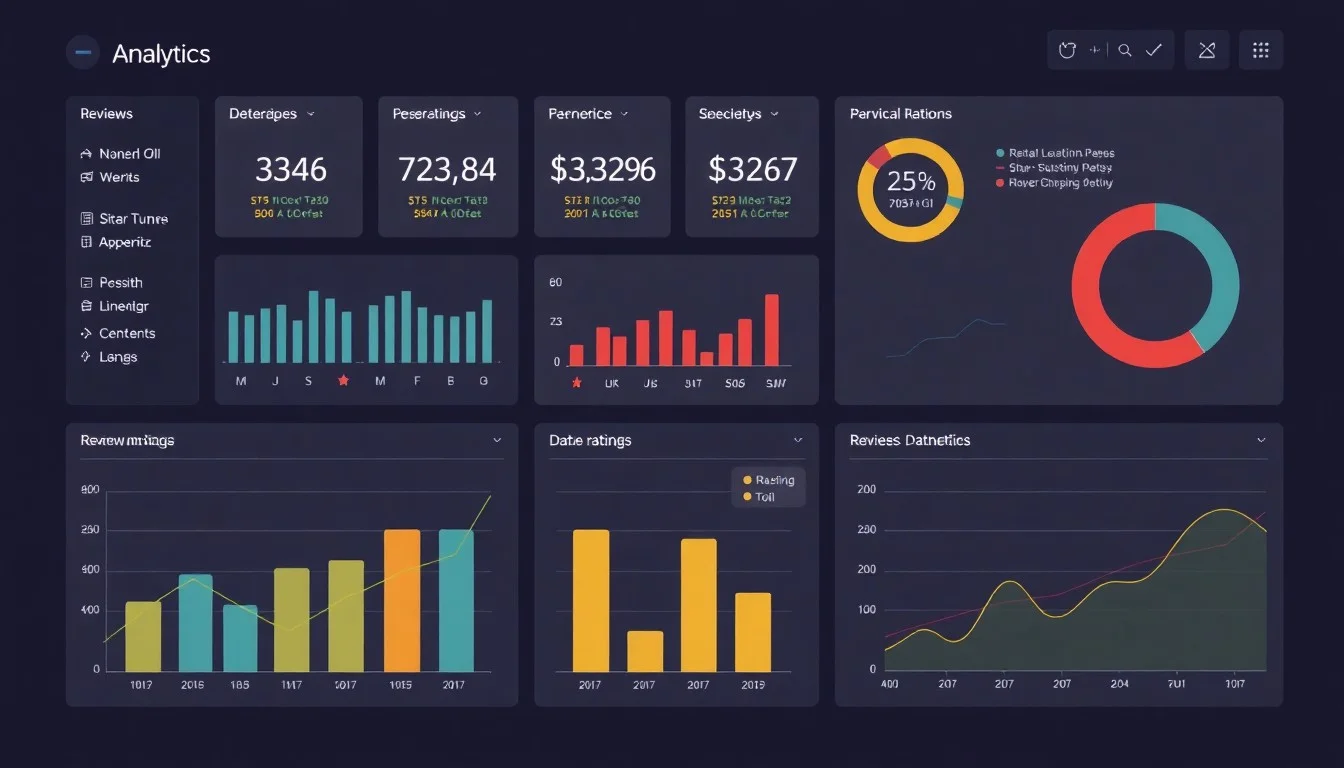
Review Analytics & Reporting: Complete Guide to Measuring Reputation ROI 2025
Master review analytics with our complete guide. Includes key metrics, platform analytics, reporting templates, competitive benchmarking, ROI measurement, and dashboard creation for data-driven reputation management.

Auto Dealership Reviews: Complete Reputation Management Guide 2025
Master car dealership review management. Includes Google Reviews, DealerRater strategies, sales vs service tactics, response templates, manufacturer programs, and multi-rooftop management.